
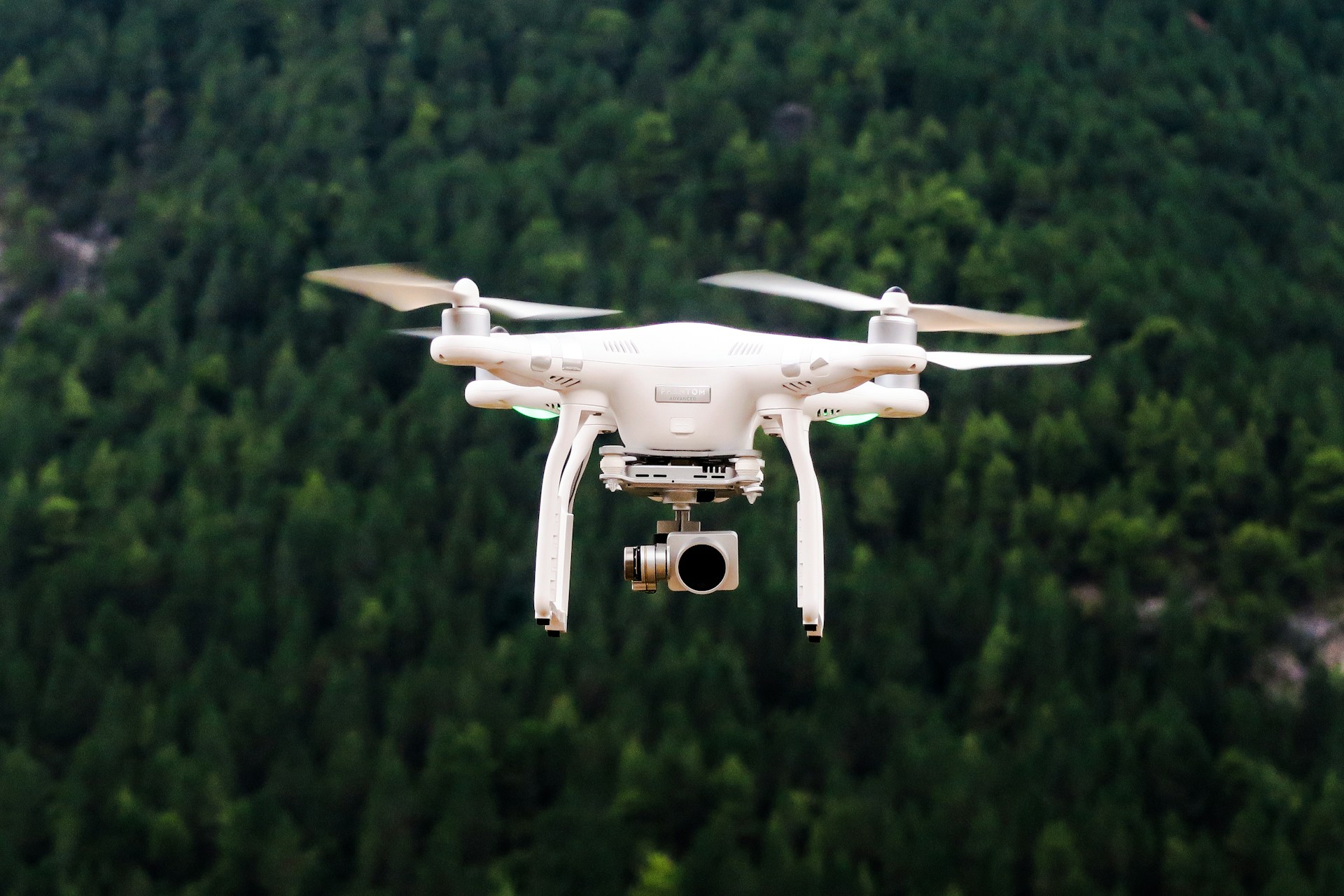
The global unmanned composites market is experiencing unprecedented growth. Valued at USD 2.99 billion in 2025, the market is projected to reach USD 3.43 billion in 2026 and soar to USD 7.87 billion by 2032, registering a compound annual growth rate (CAGR) of 14.81%. Meanwhile, the global drone carbon fiber composite structural parts market alone was valued at US 13,692 million by 2032 at a CAGR of 15.5%.
What's driving this explosive growth? The answer lies in the fundamental properties of carbon fiber composites — and the rapidly expanding applications for unmanned aerial vehicles (UAVs) across commercial, industrial, and defense sectors.
The Material Advantage: Why Carbon Fiber Dominates UAV Airframe Manufacturing
Carbon fiber composites have emerged as the material of choice for UAV airframe manufacturing for good reason. With a density of only 1.6 g/cm³, carbon fiber delivers higher strength than steel while offering exceptional shock resistance, high and low temperature tolerance, and a low coefficient of thermal expansion. Compared to aluminum alloys, carbon fiber composites can reduce weight by 20% to 40%, and in some applications, by as much as 60% to 80%.
For UAV platforms, these material properties translate directly into operational advantages:
Lightweight Construction: Every gram saved on the airframe translates to extended flight endurance, greater payload capacity, or both. A lighter airframe allows operators to carry more sensors, cameras, or cargo — or stay aloft longer on the same battery or fuel load.
High Structural Strength and Rigidity: Carbon fiber composites deliver exceptional strength-to-weight ratios, enabling UAVs to withstand the aerodynamic loads of high-speed flight and the stresses of repeated takeoffs and landings without compromising structural integrity.
Superior Durability: Carbon fiber's resistance to corrosion, weathering, and fatigue ensures that composite UAV airframes maintain their structural properties over thousands of flight hours, reducing maintenance costs and extending service life.
Design Flexibility: Advanced composite molding technologies allow manufacturers to create complex, integrated geometries that would be impossible or prohibitively expensive with traditional metal fabrication.
The Industry Shift: From Metals to Composites
The transition from traditional aluminum and metal airframes to carbon fiber composites is accelerating across the UAV industry. Major trends shaping the market include lightweight multi-material hybridization, advanced resin systems designed for extreme environments, and the growing customization of composite airframes for mission-specific drones.
Large-scale, integrated, and structurally integrated components are becoming the industry standard. As UAV platforms grow larger and more sophisticated — from commercial mapping drones to heavy-lift cargo UAVs and passenger-carrying eVTOL aircraft — the demand for advanced composite manufacturing capabilities has never been greater.
The emergence of automated manufacturing technologies — including automated fiber and tape placement, hot-dip molding, and automated assembly — is enabling manufacturers to produce large, complex composite structures with the precision and consistency required for aerospace-grade applications.
Our Comprehensive Composite UAV Manufacturing Capabilities
As a specialized manufacturer deeply engaged in composite material solutions for UAV airframes, we integrate R&D, design, machining, and customized production under one roof. Our manufacturing capabilities cover the full spectrum of UAV structural components:
UAV Structural Component Manufacturing
We produce a comprehensive range of precision UAV structural components, including fuselages, frames, arms, empennage assemblies, mounting brackets, protective shrouds, load-bearing structures, propellers, and propeller drive systems. Our manufacturing capabilities support all types of UAV platforms — from commercial and industrial models to specialized mission-specific systems.
We offer prototyping and scalable manufacturing services for both low-volume and high-volume projects, enabling customers to move seamlessly from concept to production.
Advanced Composite Manufacturing
We leverage advanced composite molding technologies to machine high-performance materials, including carbon fiber, fiberglass composites, and other aerospace-grade composite materials. Our engineering and manufacturing processes are optimized to meet critical UAV requirements:
Lightweight construction
High structural strength
Aerodynamic efficiency
Temperature and environmental resistance
Long-term durability and reliability
Stringent process control minimizes risks such as deformation, delamination, and structural failure, ensuring consistent product quality and operational performance.
Custom Design & Product Development
We provide end-to-end development services to turn concepts into mass-producible UAV structures. Our team delivers structural engineering, 3D CAD modeling, material selection, prototype development, tooling and process development, and pilot production and mass manufacturing.
We also support customized and mission-specific UAV structures engineered for distinct operating environments and performance requirements.
Build-to-Sample & OEM Manufacturing
Customers may provide physical samples, prototypes, or existing components for replication and mass production. Our engineering team conducts structural analysis, material evaluation, and manufacturing optimization to precisely replicate or improve existing designs — enabling customers to accelerate product development without supplying complete engineering documentation.
Structural Optimization & Performance Enhancement
For existing UAV platforms, we deliver engineering solutions designed to boost structural efficiency and operational performance. Our optimization services include weight reduction, structural reinforcement, aerodynamic improvement, manufacturing process enhancement, and component redesign — all aimed at extending flight endurance, boosting durability, increasing stability, and improving overall system performance.
Product Portfolio: Solutions for Every UAV Application
Our product portfolio spans a wide range of composite UAV structures:
Carbon Fiber UAV Fuselage & Airframe Kits: Lightweight and high-strength carbon fiber fuselage assemblies designed for commercial, industrial, and specialized UAV platforms.
Composite UAV Arms & Structural Components: Precision-manufactured UAV arms, frames, mounting structures, and load-bearing components for industrial drone applications.
Heavy-Duty Composite Structural Parts: High-strength composite components engineered for demanding payload, endurance, and mission-critical requirements.
Custom Composite UAV Structures: Application-specific composite structures developed according to customer specifications, including non-standard geometries and specialized configurations.
OEM & Replacement Airframe Components: Manufacturing services for UAV airframe components based on customer drawings, samples, or engineering requirements.
Lightweight Performance Upgrade Components: Composite structural solutions designed to reduce weight, improve durability, and enhance overall UAV performance.
Industry Validation: Composites Powering Next-Generation UAV Platforms
The industry's leading-edge platforms demonstrate the critical role of carbon fiber composites in enabling advanced UAV capabilities. The Xunqi V1000A, China's first large tilt-rotor hybrid eVTOL to receive Type Certification acceptance from the Civil Aviation Administration, features a full carbon fiber composite airframe and achieves a maximum range exceeding 1,000 kilometers. Similarly, the DF3000 "Youlong" manned aircraft, with a maximum takeoff weight of 3,175 kg and a payload capacity of 600 kg, relies exclusively on carbon fiber composite components for its airframe structure.
These platforms demonstrate that carbon fiber composites are not just a lightweight alternative — they are essential enablers of the long-range, heavy-payload, and high-performance capabilities that define next-generation UAV and eVTOL platforms.
The Market Opportunity: Why Now Is the Time to Invest in Composite UAV Airframes
The unmanned composites market is projected to reach $3.71 billion by 2030, growing at a CAGR of 14.4%. Key drivers include:
Growing demand for long-endurance unmanned systems driving the use of next-generation composite materials
Expansion of autonomous logistics and delivery drones boosting the need for lightweight composite designs
Increasing integration of high-performance composite structures to support aerodynamic efficiency
Rising demand for customized composite airframes for mission-specific drone applications
For commercial enterprises, technology firms, research institutes, government agencies, and aerospace-related projects, the case for composite UAV airframes has never been stronger. Lightweight, high-strength composite structures deliver measurable operational advantages — extended flight endurance, greater payload capacity, improved reliability, and lower total cost of ownership.
Why Partner With Us
As a specialized manufacturer with extensive expertise in composite material fabrication and processing for the low-altitude sector, we offer:
Flexible Customization for Diverse Applications: Whether based on technical drawings, physical samples, performance specifications, or existing product upgrades, our team can support projects at every stage of development.
Specialized Expertise in Composite Structures: Our core focus is the design and manufacturing of lightweight, high-strength composite UAV structures. By applying aerospace-inspired manufacturing practices, we deliver components with excellent dimensional accuracy, consistency, and durability.
Engineering-Driven Development Support: Our in-house engineering team provides comprehensive technical support throughout the product development process — from structural design and optimization to prototype development and manufacturing process engineering.
Precision Manufacturing & Quality Assurance: We utilize advanced manufacturing technologies, including CNC machining, compression molding, vacuum-assisted processing, and integrated composite forming techniques. A comprehensive quality control system covers material inspection, process monitoring, dimensional verification, surface finishing, and final product inspection.
Scalable Production & Reliable Delivery: Our manufacturing system supports the full product lifecycle — from prototype samples and pilot production to large-scale manufacturing. Whether you require a single prototype or ongoing volume production, we provide responsive support and dependable delivery schedules.
Get Started on Your Composite UAV Project
The low-altitude economy is accelerating at an extraordinary pace. With demand for lightweight, high-strength composite UAV structures growing across commercial, industrial, and defense sectors, now is the time to partner with a manufacturer that combines technical expertise, manufacturing capability, and a commitment to quality.
From structural design and material selection to process optimization, production, inspection, and final delivery, every stage of our process is governed by a comprehensive quality control system. Our goal is to deliver reliable, cost-effective, and highly customized composite UAV solutions that help customers accelerate product development and achieve exceptional performance in real-world applications.
Contact our team today to discuss your composite UAV airframe requirements. Whether you need a single prototype or high-volume production, we're ready to bring your vision to life.